
Packaged MBR sewage treatment plant for reuse-grade water in a compact footprint
HECS Amaze is a packaged MBR (membrane bioreactor) sewage treatment plant that combines biological treatment with Mitsubishi MBR membrane filtration in one compact FRP unit. It is designed to deliver treated water with BOD below 5 mg/l and TSS below 5 mg/l, suited to reuse for flushing and other non-potable applications, and is monitored through the HECS SmartHub app.
Made by Hubert Enviro Care Systems (HECS), Chennai, a packaged STP manufacturer since 1997. Amaze suits sites with limited space, strict outlet norms or water-reuse targets: apartments, IT parks, hotels, hospitals, campuses and factories.
- Membrane filtration (MBR)
- Reuse-grade treated water
- SmartHub remote monitoring
- O&M and AMC support

Hubert Enviro Care Systems, since 1997
design treated-water quality (TSS < 5 mg/l)
app-based monitoring, alerts and control
MBR membranes, plug-and-play FRP unit
HECS Amaze MBR at a Glance
HECS Amaze is a packaged MBR (membrane bioreactor) sewage treatment plant. It combines biological treatment with membrane filtration in one compact unit and adds IoT-enabled automation. MBR gives high-clarity treated water suited to reuse, so Amaze fits space-limited sites and projects with strict outlet or reuse requirements.
Key facts
- Technology: biological treatment with membrane filtration (MBR)
- Automation: IoT-enabled monitoring and control
- Treated water: high clarity, suited to non-potable reuse
- Best for: limited space, strict outlet norms, water reuse
- Applications: apartments, IT parks, hotels, hospitals, factories and campuses
How does an MBR sewage treatment plant work?
In short: sewage is treated by bacteria in an aerated tank, then pulled through fine membranes that hold back solids and most bacteria, so only clear water passes to the treated-water tank. This is the HECS Amaze process flow.
1. Rotary arm screen
Raw sewage enters through a screen that removes floating and coarse solids.
2. Anoxic tank
An agitator keeps the tank mixed; nitrate in recycled sludge is removed here, reducing total nitrogen.
3. Aeration tank
Air blowers supply oxygen so bacteria break down the organic load (BOD and COD).
4. MBR tank
Submerged Mitsubishi MBR membranes separate clear water from the biomass, replacing the settling tank.
5. Permeate to treated water
A permeate pump draws filtered water to the treated-water tank for reuse or discharge.
6. Sludge and membrane care
Sludge is recycled or pumped to a sludge bag system; a chemical cleaning tank serves membrane cleaning.
HECS Amaze MBR technical specifications
In short: HECS Amaze is designed to treat typical sewage (BOD 300 mg/l) to BOD below 5 mg/l and TSS below 5 mg/l, well inside the MoEF&CC metro standard. Capacity, footprint and power are confirmed for each project.
Source: HECS packaged STP brochure (treatment capability). Design values; actual results depend on inlet quality and operation.
| Parameter (mg/l unless stated) | HECS Amaze treated water | Typical inlet | MoEF&CC standard (metro) |
|---|---|---|---|
| BOD | < 5 | 300 | < 20 |
| COD | < 30 | 500 | – |
| TSS | < 5 | 200–300 | < 50 |
| Total nitrogen | < 5 | 40–60 | – |
| Faecal coliform (MPN/100 ml) | < 100 | 10,000 | < 1,000 |
| Item | HECS Amaze MBR |
|---|---|
| Technology | Membrane bioreactor (MBR) with anoxic and aeration stages |
| Membranes | Mitsubishi MBR membranes (membrane and diffuser modules) |
| Construction | FRP packaged plant; plug-and-play with minimal civil work |
| Main equipment | Rotary arm screen, agitator, air blowers, MBR permeate pump, sludge pump, chemical cleaning tank, sludge bag system |
| Automation | HECS SmartHub app: real-time monitoring, alerts and automated reports |
| Operation | Low maintenance; an operator is required |
| Capacity, footprint, power | Sized per project and confirmed in your technical proposal |

Why Choose HECS Amaze MBR STP?
- Superior Treatment Efficiency
- Compact and Modular Design
- Plug-and-Play Operation
- Eco-Friendly and Sustainable
- Smart Monitoring with HECS SmartHub App
Key Features
- High-Quality Treated Water : Produces water suitable for irrigation, toilet flushing, and cooling towers.
- Low Footprint : Compact, space-efficient design optimized for various settings.
- Advanced Membrane Technology : Durable membranes require minimal maintenance while delivering exceptional results.
- User-Friendly Automation : Integrated with the HECS SmartHub App for real-time data visualization, alerts, and remote management.
- Durable Construction : Corrosion-resistant materials ensure long-lasting performance.

MBR vs MBBR sewage treatment: which should you choose?
Both are proven technologies. MBR gives better treated water in less space; MBBR is simpler and usually cheaper to run. HECS makes both, so the recommendation follows your site, not a single product.
| HECS Amaze (MBR) | HECS Ultima (hybrid MBBR) | |
|---|---|---|
| How solids are separated | Membranes filter the treated water | Settling stage after moving-bed reactors |
| Treated water (HECS design) | BOD < 5, TSS < 5 mg/l | BOD < 20, TSS < 50 mg/l (Ultima+: BOD < 10, TSS < 20) |
| Footprint | Smaller, as no settling tank is needed | Compact, but needs a settling stage |
| Operation | Routine membrane cleaning; membranes are replaced over time | Robust and simple to operate |
| Energy and cost | Usually higher (membrane aeration and membranes) | Usually lower |
| Best for | Tight sites, strict outlet norms, water-reuse targets | Most residential and commercial sites with standard norms |
- Choose MBR (Amaze) when space is tight, the outlet or reuse standard is strict, or you want to reuse most of the treated water.
- Consider MBBR (Ultima) when standard discharge norms apply and the lowest running cost matters more than reuse quality.
- Not sure? HECS engineers compare both for your site after a survey.
Where the HECS Amaze MBR STP is used
MBR fits best where space is limited or treated water will be reused. Choose your building type for details.
Apartments and gated communities
Reuse treated water for flushing and gardens on space-limited sites.
Commercial buildings and IT parks
Compact plants for basements and tight urban plots.
Hotels and resorts
High-clarity water for landscaping and cooling.
Hospitals and healthcare
Sewage treatment with remote monitoring and alerts.
Educational institutions and campuses
Plants sized for hostels, academic blocks and staff quarters.
Manufacturing units and industrial facilities
Treatment of domestic sewage from staff areas and canteens.
Recent HECS packaged STP projects
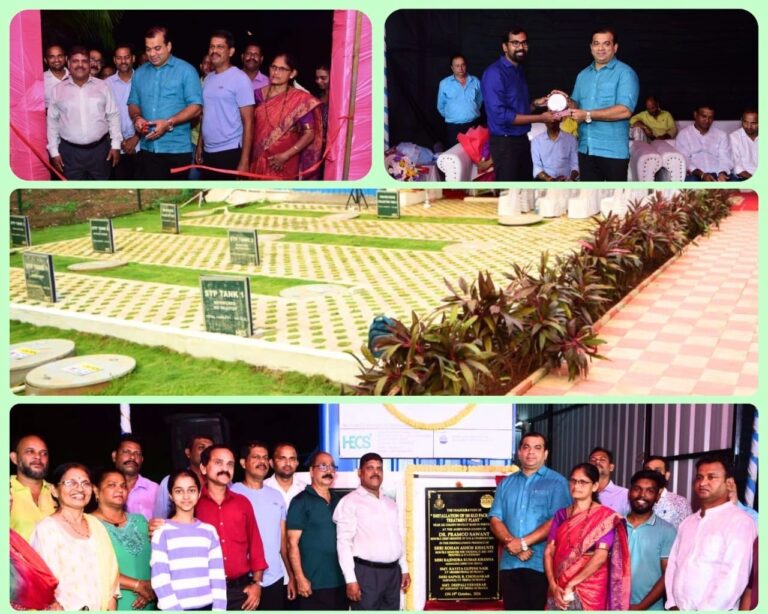
100 KLD packaged STP, Goa
Inaugurated by Goa's Minister of Tourism at Porvorim.
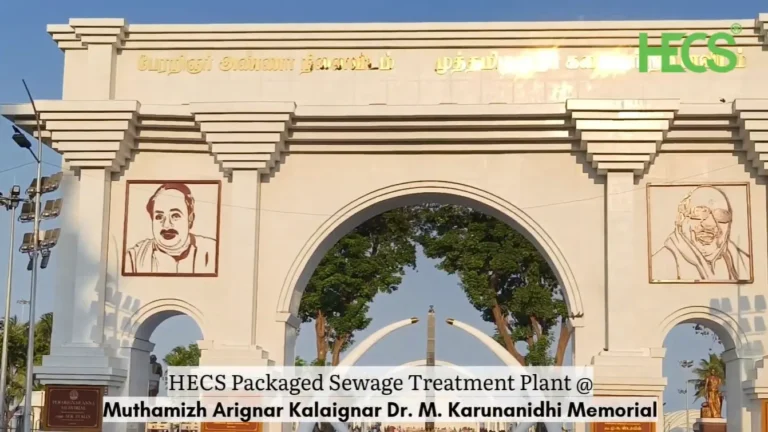
10 KLD packaged STP, Chennai
Installed at the Kalaignar Memorial, Chennai.
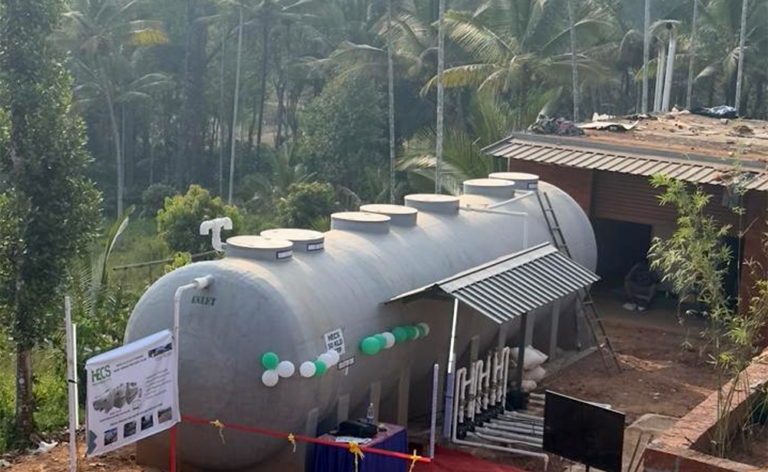
50 KLD smart STP, Wayanad
IoT-enabled plant for the Lords 83 resort.
From enquiry to a running MBR plant in 5 steps
1. Share your requirement
Users or daily flow (KLD), building type, location and reuse plans.
2. Site survey
HECS engineers check space, sewage quality and the outlet norms for your site.
3. Technical proposal
Capacity, layout and MBR configuration, with a detailed quotation.
4. Factory build and testing
The packaged unit is pre-assembled and tested before dispatch.
5. Install, commission, support
Installation and start-up, then O&M, AMC and SmartHub monitoring.
After commissioning: HECS provides O&M support and annual maintenance contracts (AMC), the recommended membrane cleaning schedule, and remote monitoring through the HECS SmartHub app.
Get a Quote for HECS Amaze MBR
Tell us your capacity, site area and reuse plans. HECS will advise whether MBR or MBBR suits your project.
MBR or MBBR: which should you choose?
MBBR (used in HECS Ultima) grows bacteria on moving carrier media and uses a settling stage; it is robust and simple to operate. MBR (HECS Amaze) replaces the settling stage with membranes, giving finer filtration, better-quality treated water and a smaller footprint, with membrane cleaning as part of routine operation. The right choice depends on available space, the outlet standard, reuse plans and budget. HECS engineers can compare both for your site.
Frequently Asked Questions about HECS Amaze MBR
An MBR plant treats sewage biologically and then filters it through membranes instead of a settling tank. The membranes hold back suspended solids and most bacteria, which gives clearer treated water.
MBR treated water is commonly reused for flushing, landscaping and cooling or utility uses, subject to the reuse standards and SPCB conditions that apply to the project.
Yes. Membranes need periodic cleaning and, eventually, replacement. The frequency depends on the sewage load and how the plant is operated. HECS provides the recommended cleaning schedule with each plant.
Capacity depends on the number of users and daily water use. Use the HECS sewage generation calculator for an estimate and confirm with an HECS engineer.
MBBR grows bacteria on moving plastic media and separates solids in a settling stage. MBR replaces the settling stage with membranes, so it gives clearer water in a smaller footprint, but it needs membrane cleaning and usually costs more to run. HECS offers both: Amaze (MBR) and Ultima (MBBR).
There is no fixed price. Cost depends on capacity, the outlet or reuse standard, site conditions, automation and the O&M scope. MBR plants usually cost more than MBBR plants of the same capacity. HECS gives a project-specific quotation after a site assessment.
Usually yes. Because membranes replace the settling tank, an MBR plant generally needs less space than a conventional plant of the same capacity. The exact footprint depends on the capacity and site layout.
Amaze suits sites with limited space, strict outlet norms or water-reuse targets, such as apartments, IT parks, commercial buildings, hotels, hospitals, campuses and factories.
HECS Amaze is designed to treat typical sewage to BOD below 5 mg/l, COD below 30 mg/l, TSS below 5 mg/l, total nitrogen below 5 mg/l and faecal coliform below 100 MPN/100 ml. Actual results depend on inlet quality and operation.
HECS Amaze uses Mitsubishi MBR membranes, submerged in the MBR tank after the anoxic and aeration stages.
Through the HECS SmartHub app, which gives real-time monitoring, alerts and automated reports, available on Android and iOS.
Yes. HECS provides installation, commissioning, operation and maintenance support and annual maintenance contracts (AMC), including the recommended membrane cleaning schedule.
HECS supplies packaged sewage treatment plants for projects in India, the GCC, Sri Lanka and other countries. Share your country, site details and local discharge limits through the enquiry form or WhatsApp.
Related Solutions and Guides
- HECS Ultima Series MBBR packaged STP
- Packaged sewage treatment plants: types, sizes and cost
- 5 reasons engineers choose MBR sewage treatment plants
- Residential sewage treatment plants
- Packaged STP for hotels and resorts
- Water consumption and sewage generation calculator
- Latest CPCB standards for sewage treatment plants
Request a technical quote for HECS Amaze MBR
Share your project details and an HECS engineer will recommend MBR or MBBR for your site and send a technical proposal. Please include:
- Company and project location
- Application or building type
- Required capacity in KLD (or number of users; 'not sure yet' is fine)
- Reuse plans and the outlet standard, if known
- Space available on site